Wait, what was that PIN?
It's embarrassing. It's frustrating. It happens to the best of us. But it's not that your memory is bad. It's just that nobody gave you the manual.
Why is remembering numbers so effortless for some?
It's not magic. It's not "natural talent."
It's a technique called the Major System.
But historically it has been:
Confusing
The instructions are dry, "too technical," and lack interactive exercises with immediate feedback.
Hard
It can be hard to come up with good mnemonics on the fly and boring to learn a peg list.
Imperfect
Even the strongest memories eventually fade away without repetition.
We Fixed It
Interactive Introduction
Our bite-sized exercises give you instant feedback, turning the boring rules into an engaging skill you learn by doing.
Mnemonic Generator
Our generator creates mnemonics, and our AI weaves them into unforgettable stories so you don't have to.
Spaced Repetition
Our algorithm notifies you to review your numbers when you’re about to forget, keeping them locked in forever.
From Sticky Notes to Peace of Mind
You interact with dozens of numbers daily, often without realizing it.
Keep PINs and important numbers safely in your mind, off sticky notes.
When your phone dies, you'll need one in your head.
Door codes and apartment numbers: all in your head.
Remember dates that actually matter to people.
License, passport, social security numbers without wallet fumbling.
Don't break the flow: what numbers are you constantly looking up?
Keep details in your head: no frantic boarding-pass checks.
Always remember your parking lot number.
Remembering isn't about survival anymore. It’s about the quiet confidence of knowing. It’s about discovering a superpower you never knew you had and mastering a skill that makes you feel limitless.
Stop outsourcing your mind.
The Method
Remember numbers in three simple steps.
Do Not Remember Numbers!
The secret is to remember vivid scenes and stories instead. The brain is wired for visuals, not abstract symbols. Do not try to remember the year 1492, just remember a "turbine," or better yet, Columbus riding a roaring turbine on his way to the Americas.
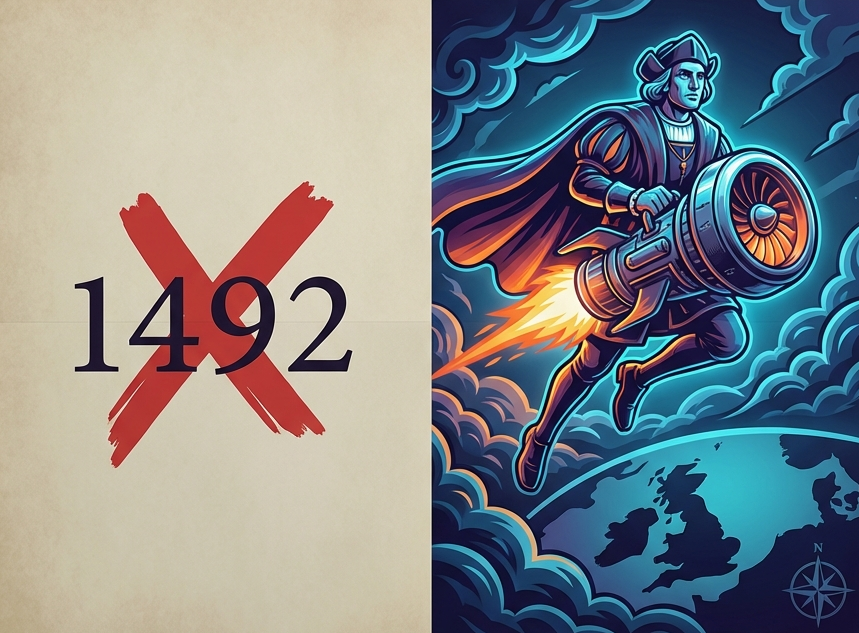
Digits to Sounds
Every digit is assigned consonant sounds based on how it looks or sounds. For example,
we use /t/ or /d/ for 1, and
/n/ for 2. The number 12 then becomes the sound
sequence
/tn/ or /dn/.
All you need to use the system is to learn the sounds for ten digits.
Sounds to Words
It's like Scrabble but for your ears.
You fill consonant patterns with
vowel sounds^
You can also use /h/ sound and sounds produced by
"w" and "y",
as in "Hey!", "Why?", and "Wow!"
to form words.
/tn/ can become tin, Etna,
or even "tea now". Hint: the Major System works with sounds, not
letters—you don’t even need to know how to write. What matters is how it sounds, not
how it’s spelled.
Words to Stories
The sounds and words are just a bridge. To make a mnemonic stick, turn it into a weird,
vivid, or emotional story that links the mnemonic to the meaning of the number.
Otherwise, it’s likely to get lost in your brain.
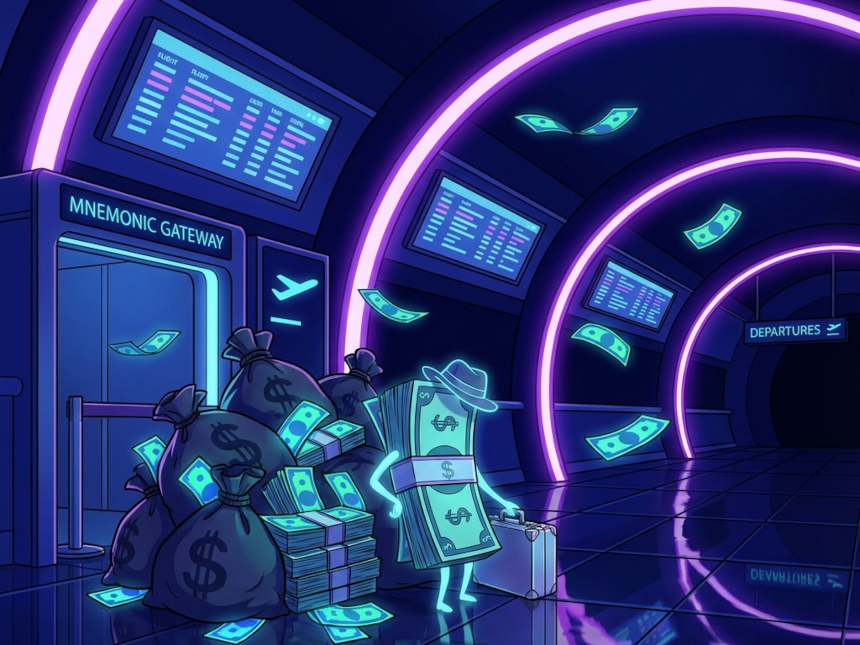
Here's an example: to remember a 15:40 departure time
(/dlrs/), imagine your travel buddy—a pack of dollars,
by the timetable screen.
Recall
To recall the number, reverse the process: identify the consonant sounds in your mnemonic words and translate them back into the original digits. The bridge works both ways.
Ready to put this into practice?
Frequently Asked Questions
Wait, what exactly is the Major System?
It's a clever phonetic system that's been around for over 300 years. Instead of trying to memorize abstract digits, you turn them into consonant sounds, then into words and bizarre stories. Since our brains are built for visuals, locations and stories, not lists of numbers, it makes it much harder to forget.
Is it hard to learn the basics?
Not at all. You only need to learn sounds for the ten digits (0–9) and practice finding these sounds in words. Most people get the hang of it in about 20 minutes of practice.
Why does it feel so hard?
It feels hard because the method combines a few simple skills. It becomes overwhelming when you tackle them all at once. This frustration causes many people to quit early. With Numerista, you learn these simple skills one by one in bite-size lessons. You learn by doing, which is the best way to acquire any skill.
Do I need to be "creative" to use this?
Nope! While it helps to have an imagination, Numerista handles the heavy lifting. If you get stuck, our generator and AI storyteller will literally build the stories for you.
Will this work for me if I'm bad with numbers?
Actually, this system is perfect for anyone. Whether you struggle with numbers or just want to upgrade your memory, it allows you to skip the "abstract" part and rely on your brain's natural talent for stories and pictures.
Can this help me in school or exams?
Absolutely. It's a lifesaver for history dates, periodic table numbers, or complex formulas. Once you turn the data into a picture, you stop memorizing facts and start remembering scenes.
Can this help me at work?
For sure. You can use it to remember measurements, part numbers, budget figures, phone extensions, security codes, tax rates, dosages, allowances, processing times, error codes, addresses; the list is endless.
How do I remember someone's birthday?
Just join the month and day! For March 11th (311), you might use "humidity" or "meditate." Pro tip: Always use two digits for the day (02 instead of 2) to avoid confusion between dates like November 2nd (1102) and January 12th (112).
What about things like credit cards?
You can break a 16-digit card number into mnemonic words, weave them into a story, and it becomes much easier to recall when you need it. Or you can let Numerista do it for you.
How many numbers can I actually remember?
There's no set limit. Memory athletes use these exact systems to memorize thousands of digits. For everyday life, you might find yourself remembering measurements, prices, seat numbers, opening hours, PINs, locker codes, and other numbers with much less effort.
Is it a web or mobile app?
It will be available online (web), on Android, and on iPads/iPhones.
Do I need your app to learn the Major System?
To be honest? No. You could find books, websites, and YouTube videos for free. But we've built Numerista to be the shortcut. It's a complete toolkit whether you want to sharpen your mnemonization skills or outsource all the heavy lifting.
How is your mnemonic generator different?
We've explored many alternatives, such as Numzi, Memcoder, PinFruit, and the Major System database. Most simply list words. Ours builds the entire mnemonic instantly, favors common words you actually know, lets you quickly generate different options, and includes an AI storyteller to weave it all together.
Can I use it offline?
Yes! The core features: training, mnemonic generator, and your saved numbers, all work without an internet connection. Even the web version works offline if you add it to your home screen or desktop. You only need a connection for AI storytelling.
How your generator handles "th",
"ng", and rhotic accents?
We recognize that the Major System is sound-based, and
pronunciation varies significantly across English accents. Our generator lets you choose how
sounds map to digits: drop "th" or map to 1; drop "ng", map
to 2, or map to 27; and whether rhotic /r/ (the pronounced
"r" after vowels in American, Canadian, Scottish, and Irish English) maps to
4 or gets dropped like in non-rhotic British English. These settings let you match how
you naturally pronounce words with generated mnemonics and peg suggestions.
What's the difference between the Free and Pro versions?
The free version is great for learning and everyday use. Pro unlocks unlimited saved numbers and exercises, advanced pegs management: 3-digit and multi-word pegs, and AI storyteller credits to help you remember longer sequences.
How does the AI storytelling work?
It takes your generated word list and weaves them into a short, bizarre story. The weirder it is, the easier it is to remember. It saves you from having to come up with the logic yourself.
Are there alternatives to the Major System?
Definitely. There are simpler systems, such as number-rhyme (like 1=Bun), and more complex ones like the Dominic System or the Ben System. We chose the Major System because it strikes the perfect balance of complexity and versatility.
Can I use your app with PAO or Dominic systems?
Yes, you can customize your pegs how you like it and use peg drill exercises to learn your pegs by heart.
What are "Pegs"?
"Pegs" are pre-memorized words for numbers 0-99 that serve as mental anchors. For example, 86 might always be "fish" (F=8, SH=6). When you need to remember parking spot "86," you picture a giant purple fish wearing sunglasses lounging across your car's hood. For longer numbers, split them into two-digit chunks and link the pegs together in a memorable scene.
How do I remember a very long number?
For things like PINs or passport numbers, a short story or even a simple vivid scene works. But for dozens of digits, you want to combine the Major System with a Memory Palace. You break the big number into small chunks, turn those into scenes, and space them out along your mental walk.
What is a Memory Palace?
Also called the Method of Loci, it's a technique where you imagine a familiar building (like your house) and "place" your mnemonics in specific well-known locations. When you need the info, you just "walk" through the building in your head and "see" them where you put them. It's an ancient power tool for long lists.
Will I forget the mnemonics over time?
Even the best mnemonics can fade if you never use them. That's why we use Spaced Repetition (SRM) principles. The app reminds you to check in on your saved numbers just before you're likely to forget them, helping to lock them in for the long haul.
Is my data safe?
Completely. Your numbers are encrypted, and by default they stay on your phone or your computer and never even touch our servers.
Can you see my passwords or PINs?
No. We don't have access to your encrypted local data. Even when you use the AI Storyteller, only the mnemonic words (like "turbine") are sent to generate the story, not your actual numbers.
Where is my data stored?
By default, it's on your device. You can choose to store it locally or enable secure cloud storage for accessibility across your devices.
Can't find the answer you're looking for?
Contact us and we’ll get back to you.